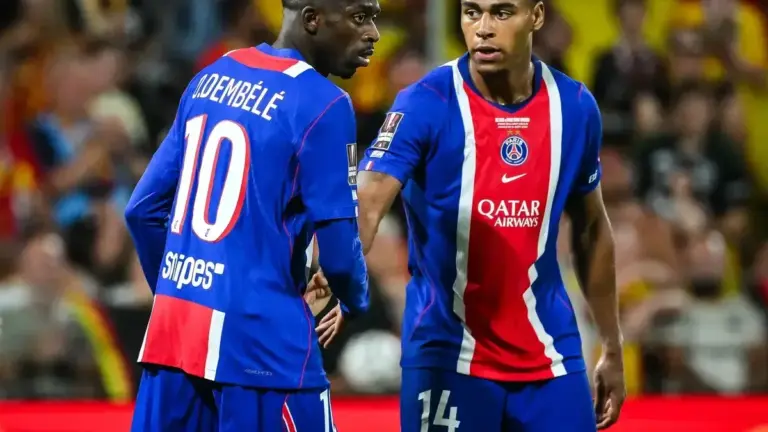
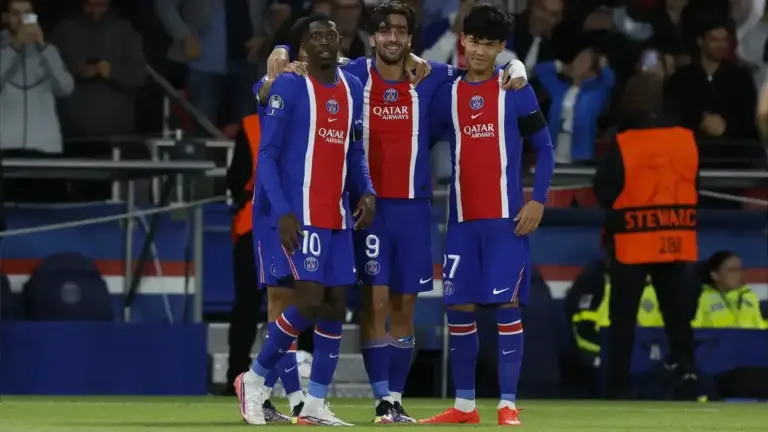
Paris Saint-Germain’s European season has only ever had one address. As back-to-back Champions League holders, Les Parisiens are in the league phase of the competition they have won in each of the last two campaigns, and nothing about that is likely to change soon.
Underneath it, though, UEFA runs two other continental trophies that shape the rest of Europe — the Europa League and the Conference League. Plenty of PSG supporters follow both without ever being told how they actually work, and the two competitions decide who Paris will eventually meet in a Super Cup, which clubs arrive in the Champions League the following year, and how much of the continent gets a European night at all.
Here is the plain-English version: what each competition is, how the seasons are structured, how a French club ends up in one, and why Paris have a genuine — if slightly dusty — stake in the story.
What is the Europa League?
The UEFA Europa League is European club football’s second tier. It began life in 1971 as the UEFA Cup and was rebranded to its current name in 2009, so a trophy that once carried the likes of Juventus, Liverpool and Inter has simply changed its packaging rather than its status.
It absorbed a second competition along the way. The old European Cup Winners’ Cup, contested by domestic cup winners, was folded into the UEFA Cup in 1999 — which matters more to Paris than it might sound, and we will come back to it.
The modern Europa League is the competition clubs drop into when they miss out on the Champions League, and the one they attack when they want a shortcut back into it. Its winners go straight into the following season’s Champions League, no matter where they finish domestically.
What is the Conference League?
The UEFA Conference League is the newest of the three, launched in 2021/22 and pitched squarely at clubs from associations that rarely see the later rounds of anything. Before it existed, a side from a smaller league could win its domestic cup, draw a European heavyweight in an early qualifying round and be finished by August.
The third tier gives those clubs a competition they can realistically go deep in, and it gives mid-table sides from the bigger leagues a European campaign they can rotate through. Its winners qualify for the following season’s Europa League — a promotion ladder that runs all the way up to the Champions League if a club keeps climbing.
How the league phases work
Both competitions now use the same Swiss-model structure that replaced the old group stage: one giant 36-team table, no groups, and a different set of opponents for every club.
The difference is volume. In the Europa League each club plays eight league-phase matches against eight different opponents, four at home and four away. In the Conference League it is six. Everything else follows the same shape as the Champions League format PSG are currently navigating, which we broke down in our guide to the Champions League league phase.
When the league phase ends, the single table does the sorting:
- Top eight — straight through to the round of 16.
- Ninth to 24th — a two-legged knockout play-off round for the remaining last-16 places.
- 25th and below — eliminated, with no parachute into another competition.
From the round of 16 onwards both tournaments look conventional: two-legged ties through to a one-off final at a neutral venue.
How a French club qualifies
European places are handed to each country by UEFA’s access list, and the number of them depends on that country’s coefficient — the rolling measure of how well its clubs have performed on the continent. France’s allocation is therefore not fixed forever; it moves as Ligue 1’s results move.
The principle, though, is consistent. The Champions League places go to the top of the table. Below them, the next-placed sides take France’s second- and third-tier berths, and the Coupe de France winner is handed a European place of its own — which is why a cup run at a mid-table club is worth so much more than the trophy itself. Conference League entrants from the bigger leagues typically have to come through a qualifying round before they reach the league phase.
If you want the domestic side of that picture, our explainer on how Ligue 1 works covers where those finishing positions come from.
What the winners actually get
Winning either competition is worth far more than the silverware.
The Europa League winners enter the following season’s Champions League league phase, and they contest the UEFA Super Cup against the Champions League holders — the fixture PSG themselves played in this August. The Conference League winners move up into the Europa League. Both routes bypass the league table entirely, which is precisely the point: UEFA wants its secondary competitions to be worth taking seriously, and a guaranteed promotion is the strongest incentive available.
Where PSG fit into all this
For most of the QSI era, Paris have entered Europe through the front door and never had cause to look at the other two. They are the reigning champions of the continent’s biggest competition, and our full breakdown of PSG’s European record sets out how they got there.
The historical link is real, all the same. PSG lifted the European Cup Winners’ Cup in 1996, and when that competition was absorbed into the UEFA Cup three years later, its lineage ran directly into what is now the Europa League. The Conference League, meanwhile, occupies almost exactly the niche the Cup Winners’ Cup once did — a way in for clubs whose league position would never have offered one.
There is also a practical reason for Parisians to keep half an eye on both. The Europa League decides who Paris would meet in a Super Cup. It feeds four extra clubs into the Champions League every season. And the coefficient points French clubs earn in Europe’s lower tiers help determine how many Ligue 1 sides get into Europe at all.
A note on the details
UEFA reviews its access list and its competition regulations regularly, and the exact number of places each country receives can change from one cycle to the next — coefficient rankings, cup-winner berths and qualifying-round pathways are all reviewed rather than fixed. The structures above are the current shape of the two competitions; for the season-specific slot allocation, UEFA’s own published regulations are the only authority worth quoting.
For more on the trophies Paris do compete for, read our guides to the Trophée des Champions, the Coupe de la Ligue and the FIFA Intercontinental Cup final in December.