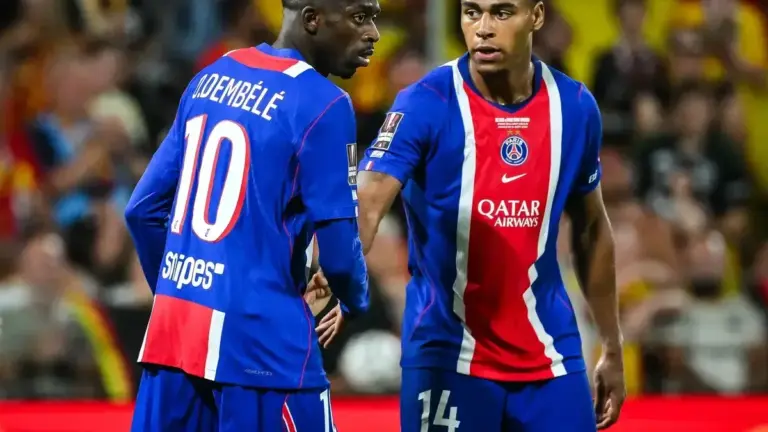
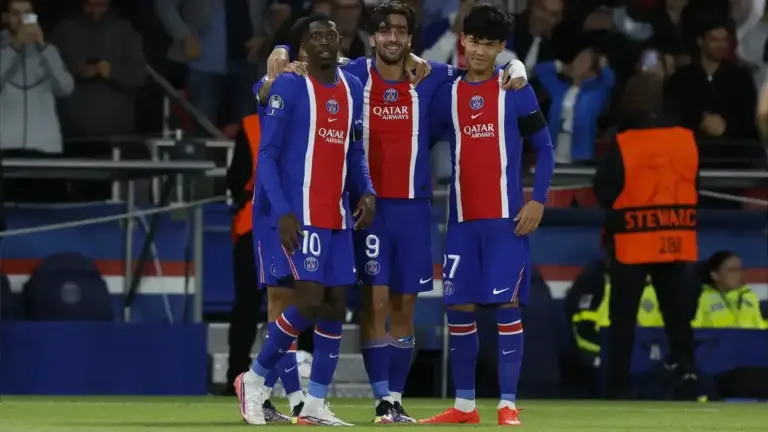
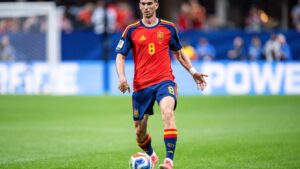
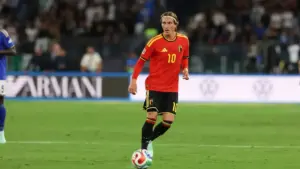
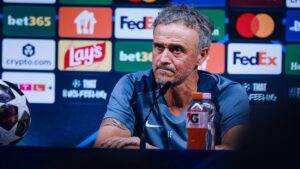
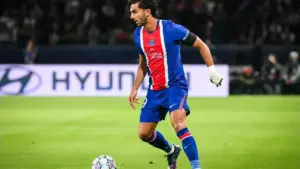
If you read anything about Paris Saint-Germain’s season, you will run into the phrase within about two paragraphs. The Trophée des Champions was lost 1-0 to Lens, and it now sits in every summary of a difficult opening to 2026/27, alongside the Super Cup win over Aston Villa and a winless Ligue 1 start. What almost nobody stops to explain is what the thing actually is.
So here it is, properly: what the Trophée des Champions is, who gets to play in it, why it keeps being staged thousands of miles from France, what Paris have historically made of it, and how much a 1-0 defeat to Lens genuinely tells you.
What the Trophée des Champions is
The Trophée des Champions is France’s Super Cup: a single match that opens the domestic season, run by the Ligue de Football Professionnel, the body that organises Ligue 1.
The name translates literally as the Champions’ Trophy, and the format follows the familiar European curtain-raiser model. The reigning Ligue 1 champions play the holders of the Coupe de France, the country’s main knockout cup. Two trophies from the previous season, one match, one piece of silverware, usually played before the league campaign has kicked off.
There is a well-worn tidy-up rule for the obvious problem. If the same club has won both the league and the cup — which in modern France happens often, because it is usually PSG — the second place in the fixture goes to the Ligue 1 runners-up. That is why the match happens even in seasons of total domestic dominance, and why the opponent is not always the cup winner.
The competition has deep roots. A version of it was played in the 1950s before falling away, and it was revived as an annual fixture in 1995. It has been a fixed part of the French calendar ever since.
The format: one match, no extra time
It is deliberately short. Ninety minutes, and if the sides are level at the whistle there is no extra time — the match goes straight to a penalty shootout. That is a preseason concession, and a sensible one, given the fixture is often played on the back of a fortnight’s training rather than a run of competitive games.
The other quirk worth knowing is the venue. This match has spent much of the modern era on tour. France’s league has used it as an export, staging editions in Tunisia, Morocco, Gabon, the United States, China, Qatar and Kuwait among others, with the aim of selling Ligue 1 in markets where French clubs have a following. That is why the game so rarely takes place in Paris, and why supporters who would happily walk to a fixture at the Parc des Princes have often ended up watching this one on television in the middle of the afternoon.
Why PSG own the competition
Because they have won so much else. The trophy is a prize for taking the league or the cup the previous season, so a club that hoovers up domestic silverware qualifies for it almost every year by default. PSG have won it more often than any other club in France, and by a wide margin, with the bulk of that haul arriving in the Qatar Sports Investments era.
That has shaped how the fixture is perceived in Paris. For a decade or more it was less a trophy to be contested than an appointment to be kept: a preseason friendly with a cup at the end of it, usually won, occasionally used to blood a new signing. Mauricio Pochettino won it in his first half-season in charge, one of several coaches to add it to the list in our rundown of every PSG head coach of the QSI era.
The flip side is that a defeat lands harder than the competition’s status deserves. When a club has treated a match as a formality for years, losing it becomes a story.
The 2026 edition: PSG 0-1 Lens
Which is exactly what happened this summer. Paris lost the Trophée des Champions 1-0 to Lens, and the result has followed the club around ever since.
In isolation it is one goal in a preseason showpiece. In context it was the first entry on a season ledger that has not improved much: three Ligue 1 games without a win — 2-2 away at Rennes, 2-2 away at Lille, then a 2-1 defeat to Monaco — leaving Paris seven points behind Monaco at the top, per Get French Football News.
Set against that, the wins have been the ones that carry weight in Europe. PSG beat Aston Villa 2-1 to lift the 2026 UEFA Super Cup, the club’s second, and opened their Champions League defence with a 6-1 win over Slovan Bratislava at the Parc des Princes, Ferran Torres scoring a hat-trick and Ousmane Dembélé twice. Luis Enrique’s side are, after all, back-to-back Champions League holders. Losing to Lens in a one-off has not changed that.
How much does it actually matter?
Less than the noise around it, and more than a friendly.
It is a genuine honour that goes on the club’s record and into the trophy cabinet, and it is the only realistic silverware some French clubs will get near, which is why Lens will have enjoyed it enormously. For PSG it is the smallest prize of the several they might contest in a season, well below Ligue 1, the Coupe de France, the Champions League and the FIFA Intercontinental Cup final in December.
Its real value to a manager is diagnostic. It is the first competitive ninety minutes of a season, against decent opposition, with something at stake, and it tends to expose whatever the summer has not yet fixed. Read the Lens defeat that way and it looks less like an embarrassment and more like an early warning that Paris have spent the weeks since trying to answer.
The short version
The Trophée des Champions is the French Super Cup: one match, run by the LFP, between the reigning Ligue 1 champions and the Coupe de France holders, with the league runners-up stepping in if one club has won both. No extra time, straight to penalties, and frequently staged abroad. PSG have won it more than anyone. In 2026 they did not — Lens took it 1-0 — and the phrase has been attached to every assessment of their season since.