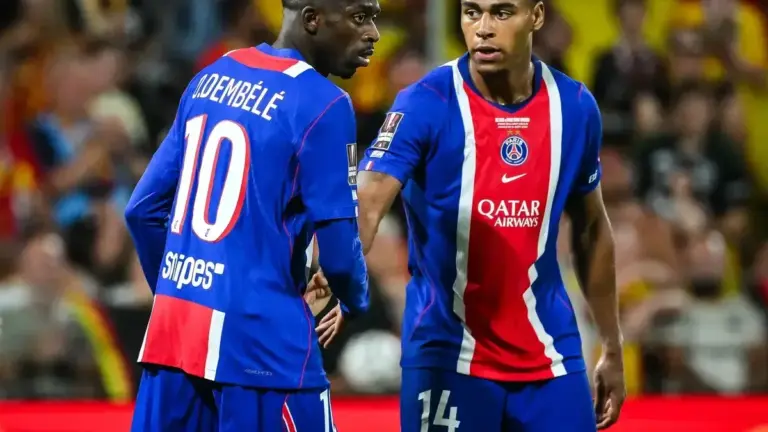
It is the phrase that governs half the football calendar, and almost nobody stops to explain it. Clubs cannot simply buy a player whenever they fancy one: they can only register new signings during two fixed stretches of the year, and the transfer window is the name for those stretches. Paris Saint-Germain spent this summer’s window rebuilding an attack and banking a fortune, and the moment it shut on 1 September 2026 the squad Luis Enrique has was the squad he was keeping. Here is how the system actually works.
What a transfer window is
Under the rules set by FIFA and applied by each national association, every country runs two registration periods per season. A club can only register a player — make him eligible to play — inside one of those periods. Outside them, the door is shut.
The longer one falls between seasons, which is why the summer is when squads are genuinely rebuilt. The shorter one traditionally opens in January, mid-season, and is a repair job rather than a reconstruction: clubs use it to patch a hole rather than to remodel. In France the dates are set and policed by the Ligue de Football Professionnel, the body that runs Ligue 1 itself.
The point of the restriction is competitive stability. Without it, a club could sign a striker in April for the run-in, or strip a relegation rival of its best defender in the final week of a title race. The window forces every squad to live with its decisions for months at a time.
What a “deal” actually means
Most transfer coverage collapses three separate stages into one word, and it is worth keeping them apart.
First comes agreement between the clubs: the fee, how it is paid, and what add-ons attach to it. Then come personal terms with the player — salary, contract length, bonuses — usually negotiated in parallel rather than afterwards. Only then does the player travel for a medical, sign, and get registered. A move can die at any of the three stages, which is why “agreement reached” and “done deal” are not the same sentence, however they are reported.
Not every transfer involves a fee. A player whose contract has expired is a free agent and costs nothing beyond wages and signing fees — PSG added goalkeeper Alessandro Longoni on that basis this summer. Loans move a player temporarily without changing who owns the registration, sometimes with an option or an obligation to buy attached. And contracts can be terminated by mutual consent, as Renato Sanches’ was on deadline day, which releases a player without a transfer at all.
Deadline day, and why it exists
The last day of the window is the one everybody watches, and the reason is leverage. A selling club that holds firm knows a buyer running out of hours has no alternative; a buyer knows a seller who has already lined up a replacement cannot afford the deal to collapse. Both sides have an incentive to wait, so a disproportionate share of business lands in the final forty-eight hours.
PSG’s 2026 deadline day was a case in point: Bradley Barcola left for Liverpool in a deal reported at up to €140m, and Sanches’ contract was torn up, all inside the closing window. Ibrahim Mbaye’s €55m move to Aston Villa was confirmed officially the following day.
The French quirks: jokers and the DNCG
France has two features that do not exist everywhere. The first is the “joker” signing, a limited mechanism that lets clubs register a player in defined circumstances once the main window has shut — which is why you will still see French clubs linked with signings in the middle of September.
The second is the DNCG, French football’s financial watchdog, which audits clubs’ accounts and can impose a transfer ban or a wage cap on a club it judges to be spending beyond its means. A French club’s window is not only a question of what it wants to do; it is a question of what it is permitted to do.
How PSG used the 2026 summer window
Sporting director Luis Campos ran a window that was as much about selling as buying. In came Maghnes Akliouche from Monaco for €50m, Ferran Torres from Barcelona for €48.5m, Mika Godts from Ajax for around €45m, Lucas Digne from Aston Villa for roughly €7m, and Longoni on a free.
Out went considerably more. Gonçalo Ramos joined AC Milan for €74m, Mbaye went to Villa for €55m, Randal Kolo Muani moved permanently to Juventus for €38m and Lee Kang-in to Atlético Madrid for €35m, on top of the Barcola fee. The net balance ran heavily in PSG’s favour, which is the part of a window that rarely makes the highlight reels.
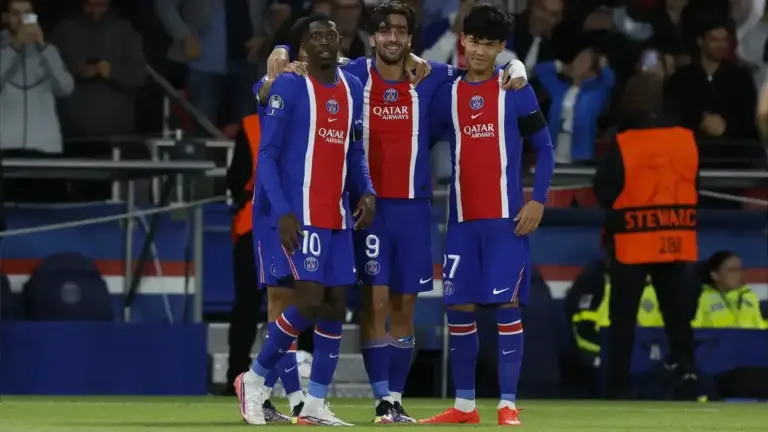
It also left visible marks on the squad. Shirt numbers 29 and 49, worn by Barcola and Mbaye, are vacant and unassigned. Ferran Torres took the 9. The first-team list Luis Enrique is working with now is the one the window produced, and short of a joker it will not change until the next registration period opens.
The short version
A transfer window is a registration period, not a shopping season. Two of them a year, one long and one short, with free agents and French jokers as the narrow exceptions. Everything else — the deadline-day chaos, the medicals, the numbers that do not get worn — follows from that single rule.