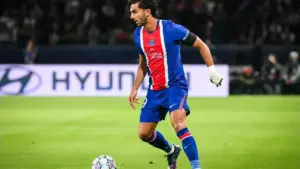
The PSG academy is the part of Paris Saint-Germain that the club’s critics never quite account for. The story told from outside is simple enough — Paris buy everything, Paris develop nothing — and for a long stretch of the club’s modern history there was enough truth in it to sting. It is not the story any more, and the 2026/27 first-team squad is the evidence.
Here is the explainer: what the academy is, what the Titis Parisiens nickname actually means, where the players are trained, who has come through it recently, and why a teenager from the Paris suburbs is now one of the most valuable assets the club produces.
What are the Titis Parisiens?
Academy graduates at Paris Saint-Germain are known as the Titis Parisiens. A titi parisien is old Parisian slang for a street kid of the capital — quick, cheeky, unmistakably of the city — and it was attached to the club’s homegrown players long before the current ownership arrived.
It is a term with rules attached. As our guide to PSG’s nicknames sets out, the Titis belongs to the players the academy actually raised. Using it about a €50m signing is the sort of thing that gets corrected quickly in the Auteuil end.
Where PSG train: Camp des Loges and Campus PSG
For decades the club’s training base was the Camp des Loges, in the forest at Saint-Germain-en-Laye west of Paris — the Saint-Germain half of the club’s name, and the site where generations of Titis were coached.
That changed in 2023, when Campus PSG opened at Poissy. The new complex replaced the ageing Camp des Loges as the base for the men’s, women’s and academy sides, putting every level of the club on one site. It is the single largest piece of physical infrastructure the Qatar Sports Investments era has built, and it was pitched explicitly as a development project rather than a first-team perk: the point of housing the academy alongside the senior squad is that the walk from one to the other stops being a leap.
Why the Paris region produces so many footballers
The academy’s raw material is the best in Europe, and that is not a Parisian boast. The banlieues ringing the capital produce more professional footballers than almost any region on earth. Dense, young, football-obsessed and packed with small clubs running serious coaching on municipal pitches, the Île-de-France has been exporting talent to Ligue 1 and beyond for thirty years.
The awkward historical fact for PSG is how much of it went elsewhere. Scouts from Lyon, Rennes, Monaco, Lille and half the Premier League worked the same suburbs, and for years they were better at converting what they found. A club sitting in the middle of the richest talent pool in European football kept watching it leave.
The academy’s old problem
The criticism that stuck was not that PSG failed to find players. It was that the club found them, trained them, and then could not give them a route into a first team assembled at enormous expense. Talent went out of the door and built careers elsewhere — Kingsley Coman, Mike Maignan, Christopher Nkunku and Moussa Diaby all came through the Paris system before making their names at other clubs.
The pipeline worked. The last step did not. Under previous regimes, the path of least resistance for a promising 18-year-old was a sale or a loan into obscurity, because the alternative was asking a manager under pressure to pick a teenager ahead of a nine-figure forward.
What changed
Two things. The first was a recruitment reset after 2023 that moved Paris away from assembling galacticos and towards a younger, harder-running squad. The second was a manager in Luis Enrique with a long record of promoting from within and no visible nervousness about doing it in big matches.
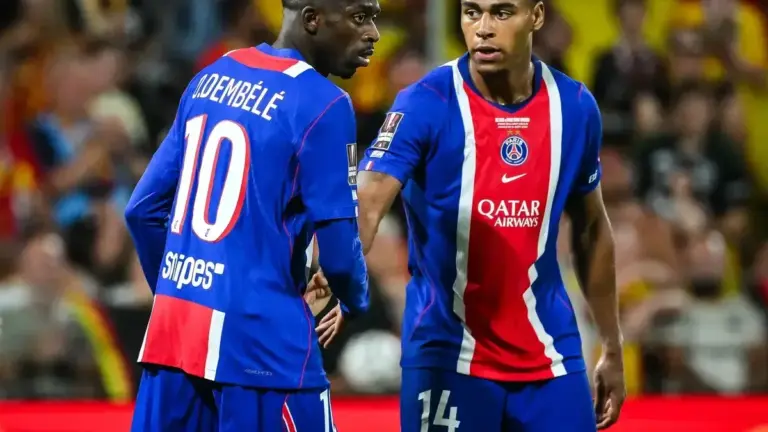
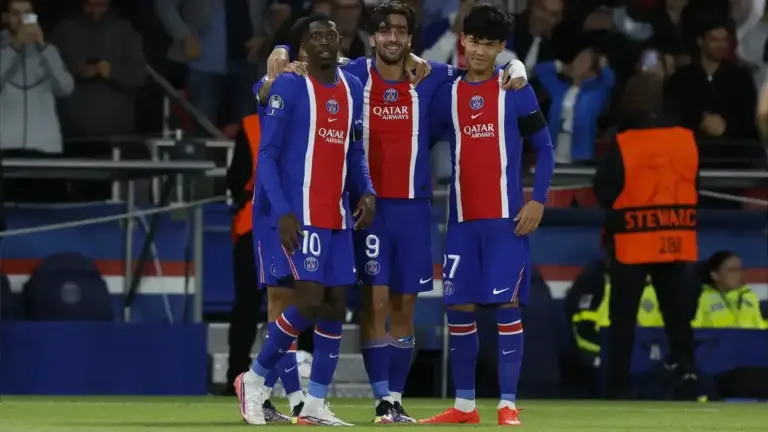
The result is a dressing room where academy graduates are not decoration. Warren Zaïre-Emery, born in Montreuil on the eastern edge of Paris on 8 March 2006, joined the academy at eight and wears No.33 in the 2026/27 first-team squad. Senny Mayulu came through the same system, stayed, wears 24, and scored in the 2025 Champions League final as Paris beat Inter 5-0 in Munich for the club’s first European Cup.
A homegrown midfielder scoring in a Champions League final is the answer to the whole argument, and it arrived inside three years of the change.
What the academy is now worth
There is a second answer, and it is financial. Ibrahim Mbaye came through Poissy and the Paris academy and left for Aston Villa in a deal confirmed on 2 September 2026 worth €55m — an enormous fee for a teenager, and one that reframes what the production line is actually worth to the club’s accounts.
That is the modern version of the model: the academy is no longer a leak, it is a two-way valve. Players good enough for Luis Enrique’s first team stay and play. Players who are not, or who want minutes sooner, leave for sums that fund the rest of the squad. Both outcomes are wins, which was never true when the only outcome was departure.
How the PSG academy works day to day
Like every French professional club, PSG run a licensed youth setup structured by age group, feeding into a reserve side and then the senior squad, with players signing aspirant and then professional contracts as they progress. French football’s training-compensation rules and the club’s own contract offers are the mechanism by which a 16-year-old is tied to the club long enough for the investment to make sense — which is why PSG contract news about academy players is often bigger news than it looks.
Loans remain part of the system for players not yet ready for Ligue 1 minutes in Paris, and several youth players moved out on temporary deals in the summer of 2026.
Why it matters for the season ahead
Paris are the back-to-back champions of Europe, and the squad that won those trophies is expensive enough that every academy graduate who forces his way into it is doing something genuinely difficult. That is the correct way to read Zaïre-Emery and Mayulu: not as sentimental selections, but as players who beat one of the deepest squads in world football to a shirt.
The academy is the one part of this club money cannot shortcut. Full detail on the club’s youth structure and Campus PSG is published by Paris Saint-Germain.