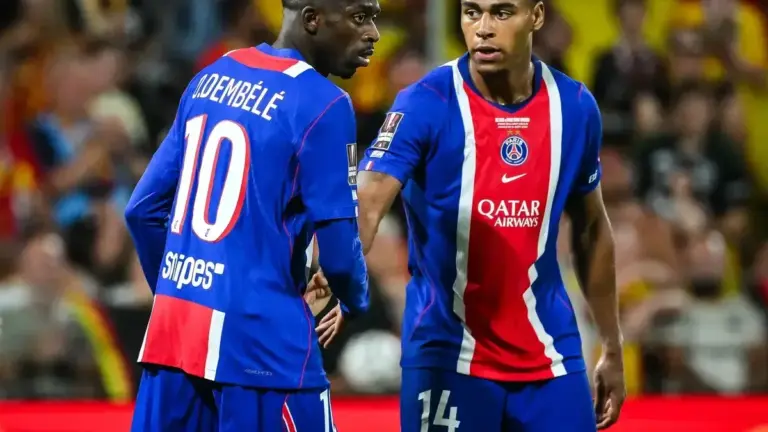
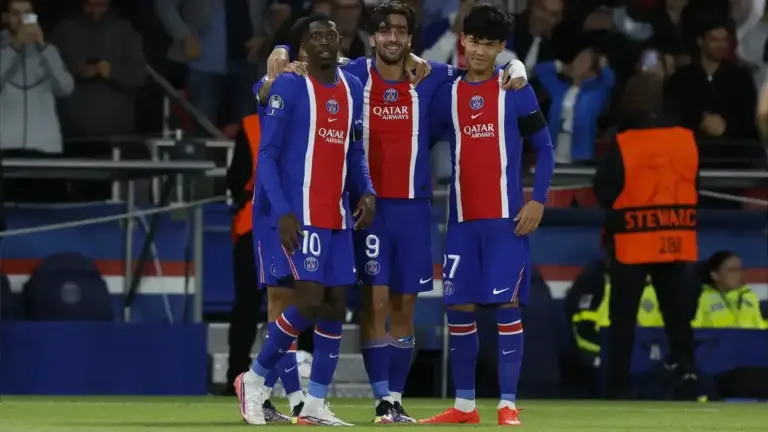
If you follow Paris Saint-Germain closely you will have read the acronym a dozen times this month without ever being told what it stands for. The CIES Football Observatory is the source behind the report that named PSG the best net traders in world football, and behind a good share of the market valuations that circulate every time a Parisian is linked with a move. It gets quoted with the authority of a governing body. It is not one.
So here is the explainer: what CIES actually is, who runs it, how its numbers are produced, why Paris turn up in its research so often, and — the part that matters most when you see a figure shared on social media — what those numbers can and cannot tell you.
What the CIES Football Observatory actually is
CIES stands for Centre International d’Étude du Sport, the International Centre for Sports Studies. It is an independent research institute based in Neuchâtel, Switzerland, created in 1995 as a joint venture between FIFA, the University of Neuchâtel and the local city and cantonal authorities. Its core business is academic: postgraduate teaching in sports management and sports law, plus research into the economics and governance of sport.
The Football Observatory is the football-specific research arm of that institute. It has been running since the mid-2000s, headed by the researcher Raffaele Poli, and it is the part of CIES that football fans actually encounter. It publishes a weekly research note and longer monthly reports, alongside a digital atlas of squad data covering dozens of leagues: player demographics, minutes played, squad stability, expatriate numbers, training-club records, transfer spending and statistical player valuations.
The important word in all of that is independent. FIFA helped set the centre up three decades ago, but the Observatory has no stake in transfers, no seat at any negotiating table and no regulatory power over anybody. Its output is research published by an academic body, not a ruling handed down by a federation. You can read it yourself at football-observatory.com.
How the CIES transfer valuations are produced
This is where most of the confusion starts, because a CIES valuation is an estimate of what a player should cost, not a record of what anybody has paid.
The method is statistical. The Observatory builds its model on completed deals — thousands of transfer fees that were genuinely agreed between clubs — works out which characteristics best predict those fees, then applies the resulting formula to players who have not moved. The variables are the ones you would expect a sporting director to weigh: age, the length of contract still to run, position, performance and playing-time data at club and international level, the competitive standard of the league involved and the economic weight of the clubs at either end of a hypothetical deal.
Understand that and the odd-looking numbers stop being odd. A 22-year-old tied down for four more years who starts every week in a major league will price enormously higher than a 30-year-old with twelve months left on identical output. That gap is not a verdict on which of them is the better footballer. It is a model of how the market has behaved, projected onto two different sets of circumstances.
Why PSG keep topping the CIES reports
Because for the best part of fifteen years Paris have been the most extreme data point in European football — and lately they have been extreme in the opposite direction to the one everybody remembers.
The September report is the case in point. As covered by PSG Talk, the Observatory calculated that PSG took in €207m more than they spent across 2026, the largest positive balance of any club in the study. Set against that, the same research put the club’s cumulative transfer deficit over the previous decade at roughly €209m — meaning one more window like this one would drag a ten-year stretch containing the Neymar and Kylian Mbappé signings back to somewhere near net zero. For contrast, the report had Al-Hilal’s net spend since 2016 at around €837m.
The trading behind the 2026 figure was not a spending freeze. Paris bought properly — Maghnes Akliouche from Monaco for a reported €50m, Ferran Torres from Barcelona for around €48.5m, Mika Godts from Ajax for roughly €45m, Lucas Digne back from Aston Villa for about €7m and Alessandro Longoni on a free. They simply sold on a different scale: Bradley Barcola left for Liverpool on deadline day in a deal reported at up to €140m, Ibrahim Mbaye joined Aston Villa for €55m, Gonçalo Ramos went to AC Milan for €74m, Randal Kolo Muani to Juventus for €38m and Lee Kang-in to Atlético Madrid for €35m, while Renato Sanches had his contract terminated by mutual agreement. If you want the architect of that approach, start with our profile of Luis Campos and how PSG recruit.
What the tables cannot capture is the mood. Paris are back-to-back Champions League holders and the best-balanced trading operation in the sport, and they are also winless after three Ligue 1 matches. Research is very good at the first two facts and completely silent on the third.
What a CIES number is not
Four things worth holding on to, because all four get lost the moment a graphic starts circulating.
- It is not a fee. No money changes hands on a CIES valuation and no club is obliged to respect one. Selling clubs quote far more, buying clubs offer far less.
- It is not a talent ranking. Contract length and age move a valuation hard in ways that have nothing to do with how well somebody plays.
- It is not an audit of the accounts. A transfer-balance study counts fees in against fees out. Wages, amortisation, agent commissions and bonuses sit outside it — so PSG’s €207m surplus is a snapshot of the trading desk, not a statement about the club’s overall finances.
- It is not a regulatory verdict. UEFA’s squad-cost controls and domestic financial rules are administered by governing bodies, not by a Swiss research centre. CIES describes the market; it does not police it.
Treat a CIES figure as what it is — a well-built academic estimate, properly labelled “per CIES” — and it is genuinely useful. Treat it as a price tag and you will end up arguing about a number nobody ever offered.
The short version
CIES is the International Centre for Sports Studies, an independent institute in Neuchâtel founded in 1995; its Football Observatory has published the football research since the mid-2000s. Its player valuations are model estimates built from real completed transfers, weighted heavily by age and contract length. Its transfer-balance work measures fees only. PSG feature constantly because their trading is extreme: €207m to the good across 2026, per the report via PSG Talk, against a decade-long deficit of about €209m.
Next time a Parisian gets slapped with a valuation on your timeline, you will at least know who did the sums — and what they were actually measuring.