The most revealing part of Portugal’s World Cup is not Cristiano Ronaldo’s gravity, Roberto Martinez’s attacking depth or the scoreline that followed Uzbekistan around Houston. For Paris Saint-Germain, the tournament is becoming something more useful: a live stress test of the club’s most important imported structure.
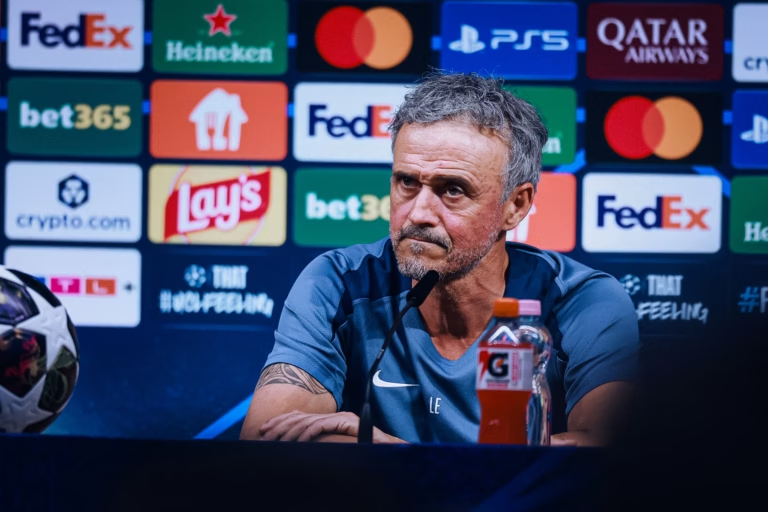
Nuno Mendes, Vitinha, Joao Neves and Goncalo Ramos arrived at the World Cup as a ready-made PSG bloc. FIFA framed them before the tournament as the Portuguese quartet who had helped power Paris to back-to-back Champions League crowns, and that description matters because it captures the real story. These are not four isolated internationals with the same employer. They are four players who already understand the speed, spacing and pressure habits that Luis Enrique has built in Paris.
That is why Portugal’s Group K run carries more weight for PSG than a normal summer tournament watch. The club’s official World Cup schedule listed Portugal as the second-most represented nation by Parisian players, with João Neves, Nuno Mendes, Gonçalo Ramos and Vitinha placed together before fixtures against DR Congo, Uzbekistan and Colombia. The final group match in Miami now arrives with Paris watching far more than qualification maths.
The PSG spine Portugal have borrowed
Portugal’s 5-0 win over Uzbekistan was the kind of group-stage result that can be lazily filed under mismatch. For PSG, it deserved a closer read. Nuno Mendes scored, Vitinha and Joao Neves supplied the interior rhythm, and Ramos remained part of the attacking equation even as AC Milan’s reported bid tried to turn his summer into a negotiation rather than a football story.
The value for Luis Enrique is in the connections. Mendes does not play like a conventional full-back for PSG; he stretches the pitch, attacks the blind side and gives the left half-space a release valve when the midfield is pressed. Vitinha does not simply recycle possession; he dictates the tempo that lets PSG choose when to suffocate and when to sprint. Neves, still only 21, gives that midfield a confrontational edge without making it frantic.
Portugal are using those same ingredients under different tactical instructions. That matters. International football strips away some of the daily club automatisms, but it also reveals which habits travel. If Mendes still times his surges, if Vitinha still controls the pulse, if Neves still reads second balls before opponents arrive, then PSG are not just watching good tournament performances. They are watching transferable authority.
Ramos is the more complicated case, and that is precisely why this World Cup stretch is useful. The Portugal setting gives PSG another piece of evidence: how he functions when surrounded by familiar Paris technicians and asked to attack narrower windows. The market sees a centre-forward valuation. Luis Enrique will see pressing cues, penalty-box timing and whether Ramos can still feel essential when he is not the headline act.
Nuno Mendes is becoming the loudest tactical signal
There are flashier ways to dominate a summer tournament than a full-back scoring from a dead ball. Yet Mendes’ free-kick against Uzbekistan felt like a neat symbol of where his game has gone. He is no longer merely the explosive left-back PSG protect through careful load management. He is now a multi-phase weapon: carrier, runner, recovery defender and set-piece threat.
That changes the way Paris can build next season. A fit, confident Mendes allows Luis Enrique to tilt the pitch without turning the left flank into a gamble. When he advances, PSG can form a back three behind him. When he holds deeper, Paris can use him as the first progression point against aggressive presses.
- Nuno Mendes: width, recovery speed and now set-piece danger.
- Vitinha: PSG’s tempo controller, capable of surviving pressure without killing rhythm.
- Joao Neves: duel strength, counter-pressing and vertical midfield aggression.
- Goncalo Ramos: penalty-box reference point whose PSG future remains tied to role clarity.
That is the attraction of this Portuguese group from a Paris perspective. It covers every line of the pitch. The left-back pushes the team up. The midfielders secure the game-state. The striker gives the attack a fixed reference point when fluency needs a target.
Vitinha and Neves keep answering the same PSG question
The most interesting PSG debate is no longer whether Vitinha and Neves can coexist. That question has already been buried by the club’s European rise. The sharper issue is how far Luis Enrique can push their partnership before it becomes the permanent organising principle of the team.
Vitinha gives PSG control without sterility. He can take the ball in tight zones, disguise the next pass and delay just long enough for the forward line to reset its angles. Neves brings a different electricity. He presses like a player who wants contact, but he is cleaner on the ball than that description usually implies. Together, they give Paris a midfield that can win the ball back and then immediately make the game smaller for everyone else.
Portugal are amplifying that dynamic because international tournaments expose midfielders quickly. Club systems can hide flaws through rehearsed rotations and daily detail. National sides have less time. If a midfielder cannot scan, receive, duel, cover and solve pressure, it shows. Vitinha and Neves have instead made the PSG influence visible.
ReadPSG has already looked at Neves’ individual World Cup subplot, but the broader point is now bigger than one player. The tournament is confirming that Paris have not simply bought elite prospects. They have bought a language. Vitinha speaks it with calm. Neves speaks it with bite. Mendes speaks it with acceleration.
The Colombia match is a useful pressure point
Portugal’s final Group K game against Colombia is scheduled for Sunday 28 June at Hard Rock Stadium in Miami, according to PSG’s official tournament guide. It comes after the Uzbekistan win gave Martinez room to manage the table, but it should still matter to Paris. Colombia will not offer the same space, and that is exactly why the match is useful.
For Mendes, it is another test of repeated high-speed actions in tournament conditions. For Vitinha, it is a control test against a midfield likely to contest rhythm rather than admire it. For Neves, it is a duel game. For Ramos, it is an opportunity to keep his football value attached to the pitch rather than to the transfer feed.
This is where the PSG lens differs from the Portugal lens. Martinez is chasing a route through the knockout bracket. Luis Enrique is watching how many minutes, knocks, habits and confidence surges return to Paris. Portugal want immediate tournament gain. PSG want their core to come back sharper, not emptied.
What Luis Enrique can take back to Paris
The danger with World Cup analysis is overreaction. A goal, a substitution or one clean passing sequence can become a summer thesis if the noise is loud enough. PSG should resist that. The real value is cumulative.
If Mendes completes the group stage with rhythm, his pre-season plan changes. If Vitinha continues to look like Portugal’s safest pressure outlet, his status as PSG’s central midfielder only hardens. If Neves keeps making tournament football look like a natural extension of club football, Paris have a younger midfielder already operating at senior-tournament speed. If Ramos finds minutes and penalty-box presence, the conversation around his future becomes less one-dimensional.
PSG’s summer will still be shaped by sales, valuations and Luis Campos’ ability to keep the squad clean after two Champions League-winning seasons. But the Portuguese bloc offers something money cannot easily recreate: chemistry already stress-tested under elite pressure.
The verdict: this is more than a World Cup subplot
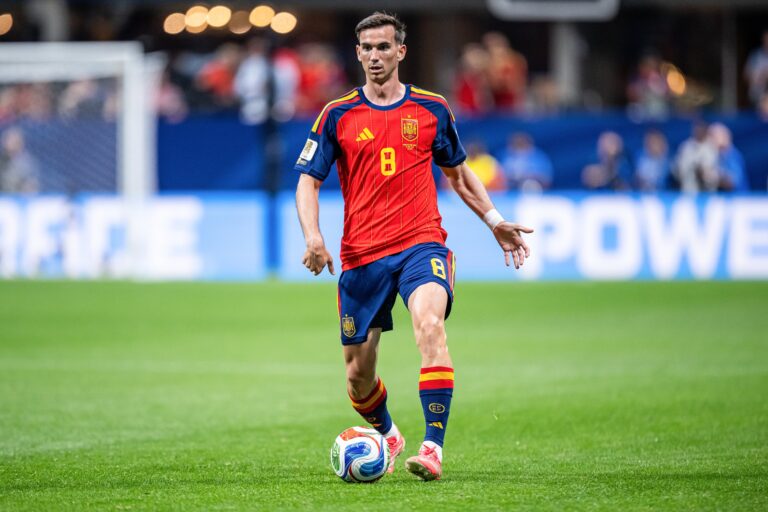
For a club carrying 16 players at the World Cup, there will always be scattered storylines. France’s meeting with Norway, Achraf Hakimi’s Morocco campaign, Marquinhos with Brazil and Fabian Ruiz with Spain all demand attention. The Portuguese group is different because it looks like a direct continuation of PSG’s club structure.
If the quartet keeps carrying Portugal through the tournament, the benefit for PSG will not be limited to reputation. It will give Luis Enrique a clearer opening template for next season: Mendes as the left-sided accelerator, Vitinha as the tempo-setter, Neves as the pressing blade and Ramos as the striker whose future still deserves a football argument before it becomes only an accounting decision.
The World Cup is supposed to interrupt club football. For PSG, Portugal may be doing the opposite. It is showing them which parts of the Paris machine still hum when the badge changes.